
The UAE artificial turf market is crowded, and many buyers don’t discover they chose the wrong supplier until the surface starts peeling, the infill compacts unevenly, or a warranty claim goes unanswered. By that point, the budget is spent and the project is delayed. The pitch no longer meets the governing body standards your facility was built around. Choosing from the right artificial grass suppliers in UAE is not a minor procurement decision, it is a long-term infrastructure commitment that shapes every training session, every match, and every maintenance cycle for the next decade.
This guide gives you a practical framework to evaluate any synthetic turf supplier operating in Dubai, Abu Dhabi, or Sharjah before you sign anything. Hadir Projects & Environment Systems LLC (HPES) brings deep regional experience across the Middle East, with a client base spanning government entities, private schools, sports clubs, and real estate developers. Use the criteria below to assess any supplier, including HPES, against the same objective standard.
Dozens of companies position themselves as artificial grass installers across the UAE, ranging from certified, experienced contractors with verifiable project histories to resellers who import turf rolls without any in-house technical capability. The core problem is that product quality, certification status, and post installation service vary widely across this market, and price alone does nothing to separate them. When you receive three different quotes for what appears to be “the same product,” you are almost certainly comparing completely different specification tiers, warranty structures, and installation approaches, differing on pile height, infill type, backing grade, shockpad specification, and warranty exclusions.
Many companies operating in the UAE artificial grass space are purely resellers. They supply the turf roll but subcontract installation to a third party, which means accountability splits the moment something goes wrong. A fully integrated supplier, one that designs, supplies, and installs under a single contract, gives you one point of contact and clear responsibility across the entire project. This distinction matters more than almost anything else on your shortlist.
The indicators that distinguish a supplier with genuine regional depth include the total number of completed projects, the diversity of client types served, and the range of facility categories they have delivered. Top-tier artificial turf suppliers in UAE carry verifiable project portfolios spanning football pitches, multi-sport complexes, school sports areas, and leisure facilities. When evaluating any supplier, request a project list with client names, facility types, and completion dates you can independently verify.
FIFA certification is the clearest, most objective baseline to apply before evaluating anything else. It is not a marketing badge. FIFA Quality and FIFA Quality Pro are independently tested standards, documented in FIFA’s Football Turf Quality Programme, that cover ball roll, shock absorption, traction, and surface durability under real playing conditions. Any supplier who cannot produce certified product documentation for the specific turf grade your project requires is not the right fit for a sports-use installation in the UAE.
The two certification tiers serve different pitch types. FIFA Quality covers community and training-level pitches: recreational use, school facilities, and club-level football. FIFA Quality Pro covers elite competition surfaces intended for professional and international-level play. For outdoor football pitches in the UAE, tested parameters include pile height (typically 40, 60 mm for sport, depending on certification tier), infill type, shockpad requirements, and specific performance thresholds for ball rebound and player traction. Ask every supplier for the specific laboratory test report tied to the product SKU they are proposing, not a generic “FIFA approved” claim attached to a different product.
The practical verification steps are straightforward. Request the FIFA-accredited laboratory report for the specific product, confirm the product appears on FIFA’s official approved products database, and ask whether the completed installation will be logged as a licensed FIFA Quality field post-handover. This last point matters because certification applies to the installed system, not just the turf brand. Suppliers who show a certificate for one product but propose to install a different, uncertified product during procurement are a red flag you should not ignore.
The UAE climate puts specific demands on artificial turf that buyers in other markets don’t face at the same intensity: sustained ambient temperatures above 40°C, high UV exposure, and variable humidity depending on proximity to the coast. These conditions directly affect how long a surface lasts and how consistently it performs under daily use. Getting the product specification right determines whether your facility is still playing well in year eight or deteriorating by year three.
PU (polyurethane) backing outperforms latex in UAE heat and humidity. It resists delamination, holds drainage performance longer, and handles the thermal cycling that occurs between peak-summer afternoons and cooler evenings. When evaluating UV protection, ask specifically whether UV stabilizers are built into the yarn extrusion or applied only as a surface coating. The former lasts significantly longer under sustained UAE sun. Many suppliers in the UAE market advertise UV guarantees in the 5, 10 year range on sports-grade products; anything at the lower end of that window deserves direct scrutiny before you proceed. Always request the specific warranty document rather than relying on a verbal assurance.
Poor installation negates the quality of even the best product on the market. A warranty that excludes the most common failure modes provides no real protection when you need it. These two areas are common sources of disputes between buyers and turf suppliers in the UAE, and both are avoidable if you know what to ask.
A proper turf installation involves site preparation, subbase compaction, drainage laying, turf cutting and seaming, infill application, and line marking. When suppliers outsource this work to day-rate crews, consistent quality control across those steps becomes difficult to guarantee, ask for documented QC procedures, references, and confirmation of an assigned site supervisor. Ask directly whether the supplier employs its own installation teams and whether they have completed installations of comparable scale and surface type in the UAE. For a standard 11-a-side football pitch in the region, plan for 8, 14 weeks from site mobilization to handover on a full build with earthworks and drainage; prepared-ground projects can typically be completed in 8, 10 weeks.
Send every supplier the same standardized brief to make quotes genuinely comparable. Include site dimensions, intended use (sport vs. leisure vs. residential), the required FIFA certification grade, and your target completion timeline. Ask for a written line-item breakdown that separates product cost, subbase preparation, installation labor, infill supply, and post-installation inspection. Without this structure, you will receive quotes built on completely different assumptions, and comparing them becomes guesswork.
Established artificial lawn suppliers in UAE provide physical samples on request; confirm the exact sample size available when you make contact, as this varies by supplier. When you receive a sample, check pile height for consistency across its surface, check backing flexibility (brittle latex cracks when bent, a sign it will delaminate in UAE heat), and confirm the supplier provides a product data sheet that matches the exact sample in hand. Do not base a purchasing decision on a product photo, a showroom display tile, or a supplier’s verbal description of the material. The sample you evaluate should match precisely what gets installed on your site.
The decision framework is straightforward once you apply it consistently. Start with FIFA certification to filter out unqualified products immediately. Then evaluate each supplier’s installation capability and regional project track record. Compare warranty terms document-to-document rather than headline to headline, and validate pricing against a clear, standardized specification brief so you are comparing equivalent scopes. The best suppliers in this market welcome these questions because they have the answers. They carry test reports, project portfolios, and warranty documents that hold up to scrutiny. Those who deflect or provide vague reassurances are telling you something important about how they will perform when a problem arises on site.
HPES brings FIFA-compliant artificial turf, end-to-end installation managed under a single contract, and a regional track record spanning government, education, and sports club projects across the Middle East. When you are ready to move forward, get in touch with the HPES team to request a consultation, a product sample, or a project-specific quote, and start your evaluation on solid ground. As one of the leading artificial grass supplier in UAE, HPES is ready to walk you through specifications, certification documentation, and site requirements from day one.
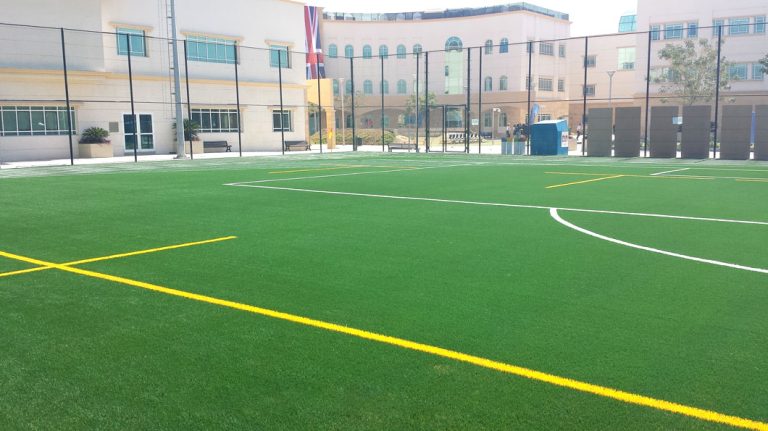
The UAE artificial turf market is crowded, and many buyers don’t discover they chose the wrong supplier until the surface...
Know More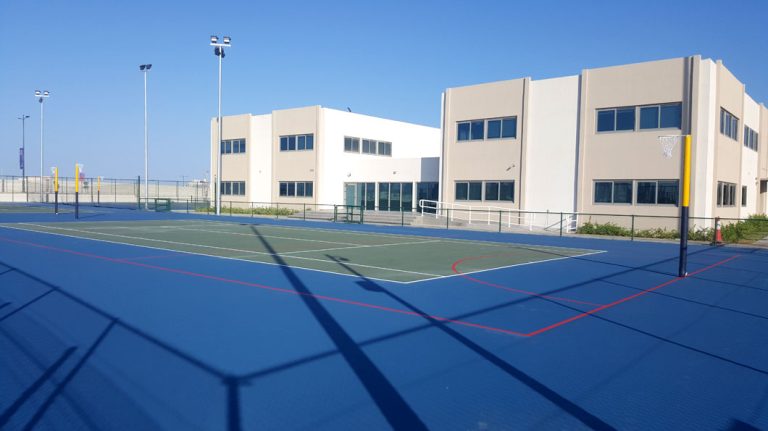
No wonder innovation has taken over every aspect of life, and sports infrastructure is no longer an exception. In recent...
Know More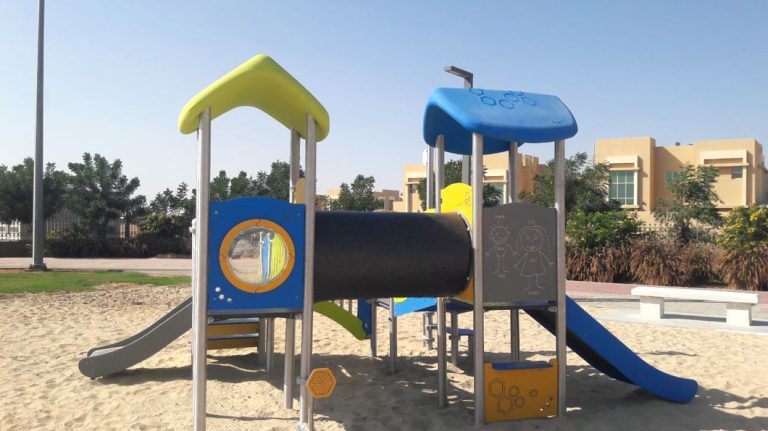
In the UAE, children’s playgrounds are far more than recreational add-ons; today, they are a prime lifestyle amenity that directly...
Know More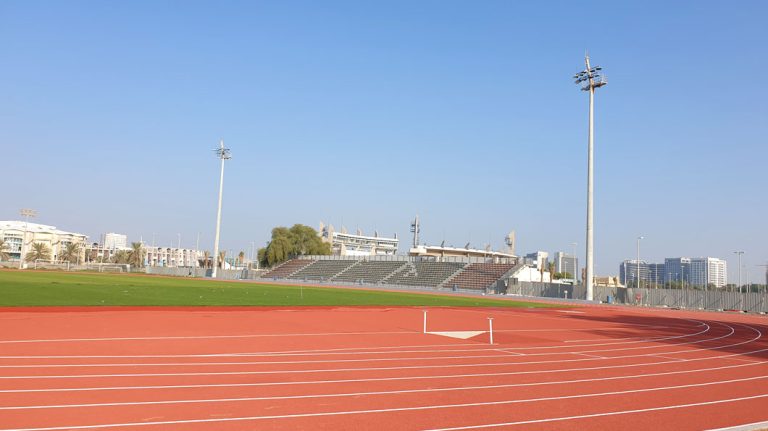
Is your facility’s running track wearing out faster than expected? And when you start looking at Athletic Track Flooring in...
Know More
Is your outdoor space struggling with the UAE’s relentless summer heat? Have you ever wondered how commercial spaces in Dubai...
Know More
Maintaining a green surface in the UAE stadiums using natural grass has become a challenge due to rising temperatures, increasing...
Know More
